
The ballroom was already loud with political energy when the atmosphere suddenly changed.
Supporters waved signs.
Television cameras scanned the crowd.
Reporters lined the edges of the stage waiting for another explosive moment from Donald Trump, whose rallies and public appearances have become famous for producing viral confrontations almost weekly.

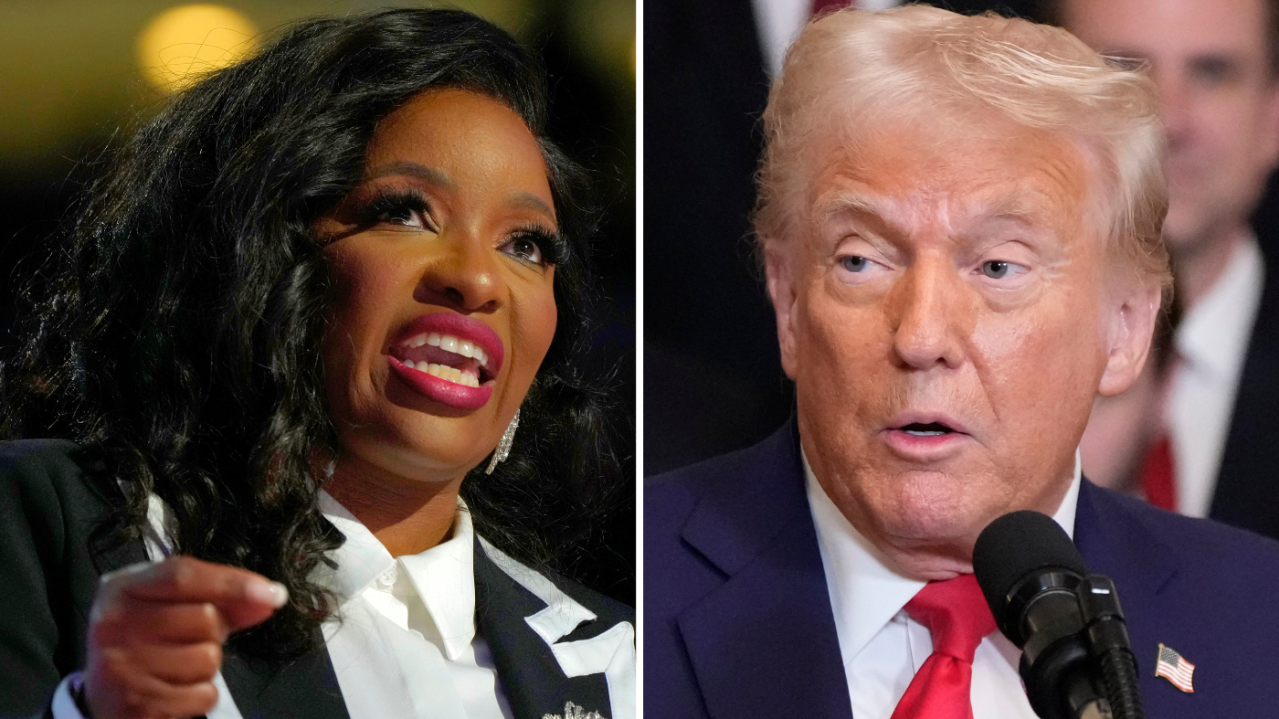
But nobody inside the packed venue expected the night’s most unforgettable moment to come not from Trump himself — but from the composed, razor-sharp response of Jasmine Crockett after Trump publicly mocked her family during a heated political exchange.
And according to stunned witnesses in the room, the reaction was so immediate and so devastatingly calm that the entire atmosphere froze within seconds.
What began as another aggressive political attack suddenly transformed into one of the most talked-about confrontations of the week.
The clash reportedly started during a fiery speech in which Trump targeted several Democratic lawmakers by name while criticizing what he called “performative outrage politics” coming from Washington progressives.
The crowd cheered loudly as Trump moved rapidly from one political rival to another, delivering sarcastic jokes and familiar insults in the high-energy style that has defined his public appearances for years.
Then he turned toward Jasmine Crockett.
At first, the criticism focused on policy disagreements and televised confrontations that had already generated headlines in recent months. Trump mocked Democratic messaging, attacked Crockett’s media appearances, and joked about congressional hearings that had gone viral online.
The audience reacted exactly as expected — loud applause, laughter, and chants echoing through the venue.
Then the tone shifted.
According to multiple accounts from attendees and political reporters present at the event, Trump made remarks referencing Crockett’s upbringing and family background in a way many people inside the room immediately recognized as unusually personal.
The reaction became noticeably more uncomfortable.
Some supporters still laughed.
Others reportedly exchanged uneasy glances.
Even several journalists covering the event later noted that the atmosphere briefly changed as the comments landed.
Within minutes, clips from the speech flooded social media platforms, igniting immediate outrage from Democratic figures and fierce defenses from Trump supporters who argued the remarks were being exaggerated politically.
But the real explosion came later.
Because Jasmine Crockett responded.
And she did not respond with yelling.
She did not respond with outrage.
Instead, during a televised appearance only hours later, Crockett addressed the comments with a level of composure that instantly shifted the emotional energy surrounding the controversy.
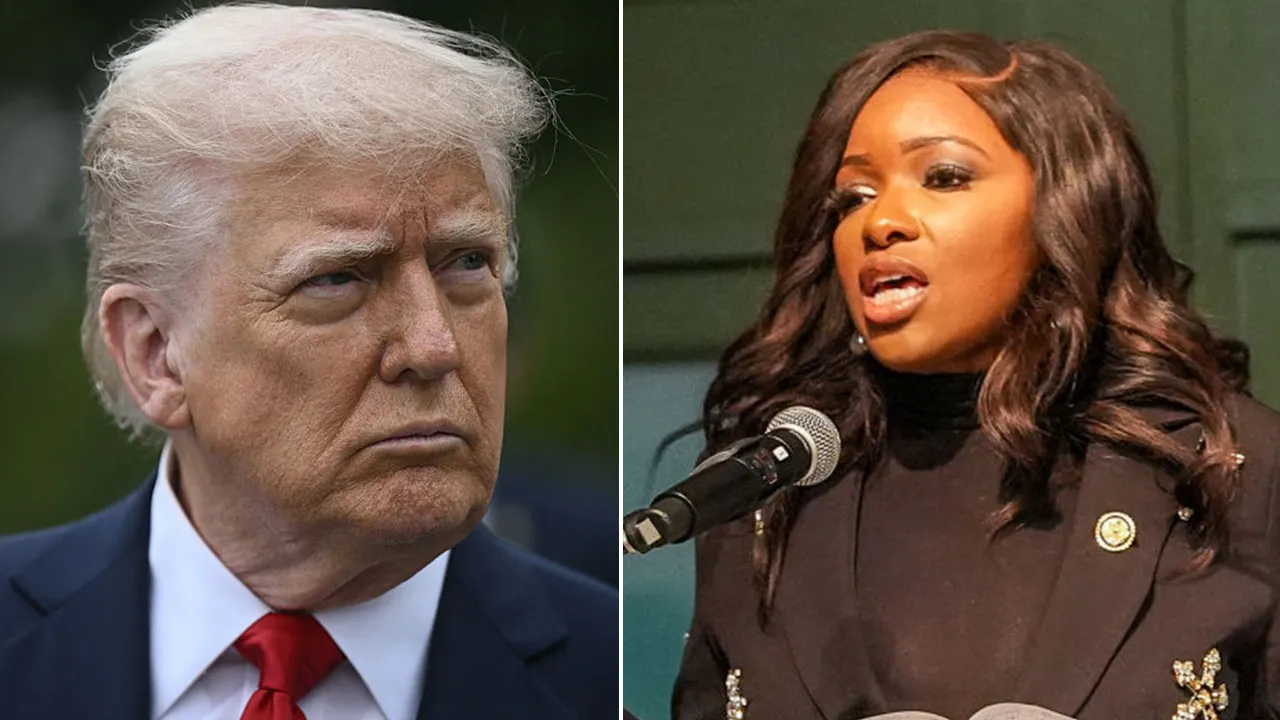
The room reportedly went silent almost immediately after she began speaking.
Viewers expecting a screaming political counterattack instead watched Crockett calmly acknowledge the remarks before pivoting toward a broader discussion about dignity, family sacrifice, and political culture in modern America.
Then came the line that changed everything.
Without raising her voice, Crockett reportedly looked directly toward the camera and said:
“My family taught me something Donald Trump may never understand — real strength doesn’t come from humiliating people. It comes from surviving life without losing your humanity.”
The studio froze.
Audience members who moments earlier had been shifting in their seats suddenly sat motionless.
Several commentators later admitted the atmosphere inside the room changed instantly after the remark landed.
No shouting.
No dramatic theatrics.
Just silence.
And that silence spread across the internet at lightning speed.
Within minutes, clips of Crockett’s response exploded across TikTok, X, YouTube, and Instagram. Political influencers from both parties reposted the moment while cable news programs interrupted regular segments to replay the exchange repeatedly.
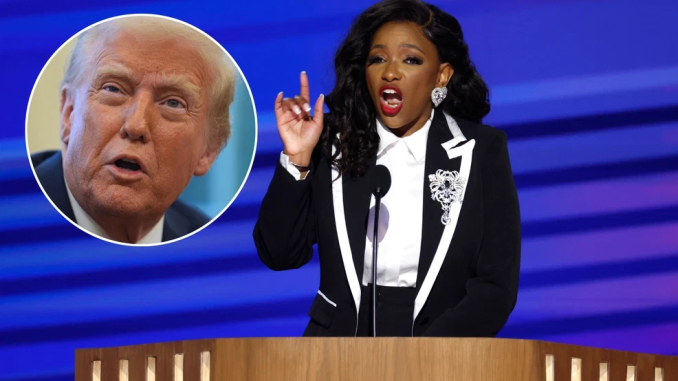
One viral post receiving millions of views simply read:
“She didn’t even attack him back. She just ended the conversation.”
Supporters of Crockett celebrated the response as masterful restraint under pressure. Progressive commentators praised her ability to remain composed while redirecting the conversation toward empathy and character rather than personal insult.
Several Democratic strategists reportedly described the moment privately as “politically lethal” because of how calm Crockett appeared compared to the escalating aggression dominating modern political discourse.
But Trump supporters pushed back hard.
Conservative influencers accused media outlets of selectively framing the confrontation to make Trump appear cruel while portraying Crockett as morally superior. Some argued Trump had merely criticized political branding and public image rather than genuinely attacking her family personally.
The arguments became vicious almost immediately.
Cable news panels descended into shouting matches.
Political podcasts released emergency reaction episodes.
TikTok creators dissected facial expressions frame by frame.
Even people normally uninterested in politics suddenly found themselves watching the clips repeatedly because of the emotional contrast between Trump’s aggressive rally style and Crockett’s measured response.
That contrast became the story itself.
Several media analysts noted that modern audiences increasingly react not simply to insults, but to emotional control. In an era dominated by outrage and nonstop screaming, moments of calmness often land with even greater force.
One communications expert appearing on television summarized the exchange bluntly:
“Trump expected another fight. Instead, she gave him a mirror.”
That line spread online rapidly.
Meanwhile, behind closed doors in Washington, political strategists from both parties reportedly studied the viral moment intensely. Democrats viewed Crockett’s response as a powerful example of disciplined messaging capable of resonating beyond traditional partisan audiences.
Republicans, however, worried the emotional framing surrounding the exchange could damage perceptions among suburban and independent voters already exhausted by constant political hostility.
Inside conservative media, some commentators urged Trump allies to stop engaging in personal attacks entirely, warning that such moments increasingly backfire when opponents respond calmly instead of emotionally.
Others insisted the controversy would fade within days like countless previous internet firestorms.
But the clips kept spreading.
By the following morning, millions of people had viewed Crockett’s response. Late-night comedians referenced the confrontation during monologues while online commentators debated whether the exchange symbolized a broader shift in political communication itself.
Was outrage finally becoming less effective than composure?
The question dominated media analysis throughout the day.
Meanwhile, Crockett herself remained remarkably restrained despite the escalating attention. During follow-up interviews, she avoided escalating the conflict further and instead focused repeatedly on themes of respect, family, and political accountability.
That refusal to intensify the feud only strengthened public fascination.
“She understood the assignment perfectly,” one political analyst remarked during a primetime segment. “She let the silence do the damage.”
For Trump, the controversy represented another reminder of how quickly political moments now mutate into viral emotional spectacles far beyond the control of campaigns, advisers, or media spin.
One clip.
One sentence.
Ten seconds of silence.
And suddenly the entire country is arguing about dignity, power, and the emotional temperature of American politics itself.
By nightfall, the confrontation had evolved into far more than a simple exchange between two political figures.
It became another symbolic battle in America’s endless culture war — one side embracing confrontation and dominance, the other attempting to weaponize restraint and composure against it.
And somewhere between those competing styles, millions of Americans kept replaying the same moment over and over again:
The instant the room went completely silent.