
Washington woke to absolute chaos Tuesday morning after a stunning Supreme Court ruling ignited what insiders are already calling the most explosive constitutional showdown in modern American history.
Crowds gathered outside the White House before sunrise, cable news networks broke into nonstop emergency coverage, and lawmakers sprinted through the halls of Congress as rumors spread that impeachment articles against Donald Trump were being drafted behind closed doors.
The dramatic ruling, issued in a razor-thin 5–4 decision, sent shockwaves through every corner of the political establishment. Legal analysts struggled to interpret the full consequences of the decision as furious debates erupted across television studios, social media platforms, and Capitol Hill itself. Within minutes, hashtags demanding accountability surged to the top of trending lists while Trump supporters flooded Washington in protest caravans stretching for blocks.
By midday, the atmosphere in the nation’s capital had transformed into something resembling a political pressure cooker ready to explode.
“This changes everything,” one senior congressional aide whispered outside the Senate chamber while cameras followed lawmakers rushing through security checkpoints. “People inside the Capitol are panicking.”
The ruling centered on presidential authority and executive power, but the political consequences moved far beyond the courtroom. Constitutional experts warned that the decision could dramatically weaken Trump’s ability to govern during the final stretch of his term. Opponents immediately seized the moment, arguing that the Court had effectively opened the door to renewed investigations that had previously stalled for months.
Inside the White House, tension reportedly reached extraordinary levels.
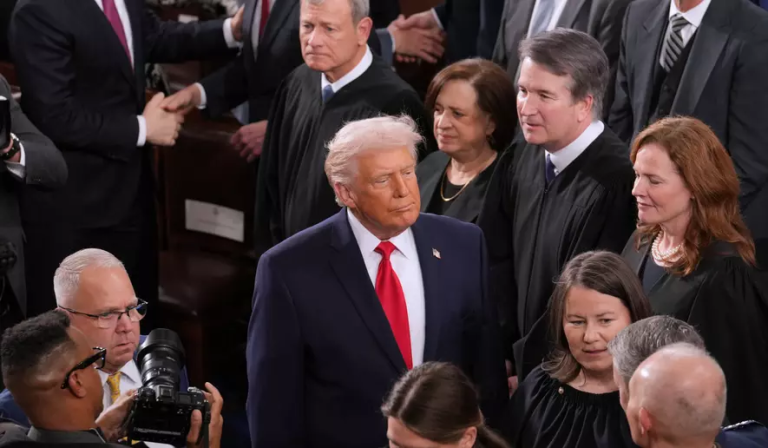
Sources familiar with internal discussions described aides scrambling between offices while senior advisers debated emergency response strategies. Staff members allegedly shouted over one another during heated exchanges in the West Wing as phones rang nonstop from lawmakers, donors, and media outlets demanding answers.
Outside, supporters waving giant Trump banners gathered near Pennsylvania Avenue chanting “Fight Back!” while counter-protesters demanded immediate impeachment proceedings. Police erected additional barricades after several confrontations nearly turned violent.
Meanwhile, major news networks interrupted scheduled programming as anchors attempted to keep pace with the rapidly developing crisis.
One particularly dramatic moment unfolded when a veteran legal commentator appeared visibly stunned during a live broadcast.
“We may be witnessing the beginning of a constitutional earthquake,” the commentator said. “There is no modern precedent for this level of institutional collision between the Supreme Court and a sitting president.”
Behind the scenes, panic spread through both political parties.
Republican leaders reportedly held emergency conference calls throughout the morning as nervous strategists feared the controversy could devastate the party ahead of upcoming elections. Several GOP lawmakers avoided reporters entirely, slipping through underground tunnels beneath the Capitol to escape waiting cameras.
Others tried to defend Trump publicly, though their messaging often appeared uncertain and contradictory.
“This ruling does not remove the president from office,” one Republican senator insisted during a chaotic press conference interrupted repeatedly by shouting protesters nearby. “People need to calm down.”
But calm was nowhere to be found.
Democratic lawmakers moved quickly to capitalize on the moment. By early afternoon, progressive members of Congress openly discussed launching aggressive new hearings. Some reportedly pushed party leadership to begin immediate impeachment proceedings before the political momentum faded.
One House member emerged from a closed-door strategy meeting and delivered a statement that instantly ignited headlines across the country.
“No president is above the Constitution,” the lawmaker declared while cameras flashed continuously. “The American people deserve accountability.”
Those words detonated across social media within seconds.
Political influencers, commentators, celebrities, and activists immediately entered the fray. Clips from the Supreme Court announcement spread online at lightning speed, generating millions of views in only a few hours. Television helicopters circled above crowds gathering outside federal buildings as demonstrations expanded into the evening.
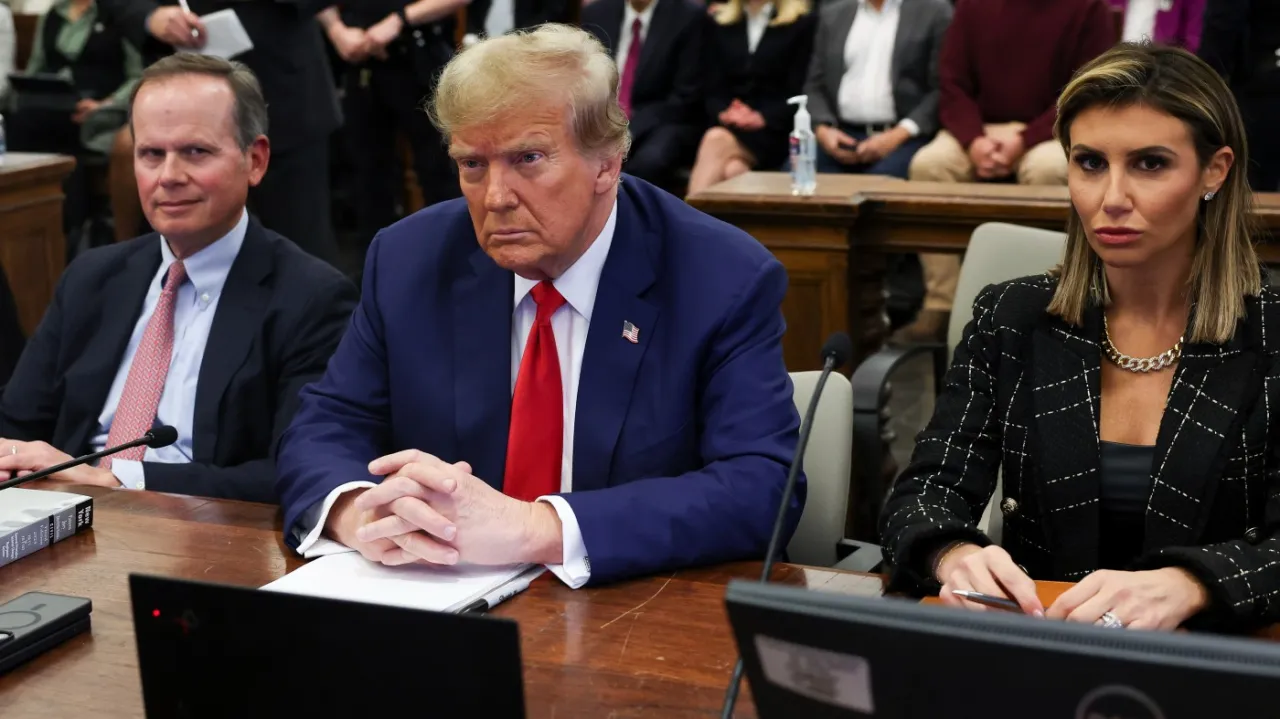
The sense of instability deepened when reports surfaced that several administration officials were privately considering resignation.
While no departures were formally announced, speculation exploded after two high-profile White House figures abruptly canceled public appearances. Journalists stationed outside executive offices noticed unusual movement throughout the afternoon, including senior staff members entering and exiting secure meeting rooms carrying stacks of documents.
Inside conservative media circles, outrage intensified.
Prominent Trump allies accused the Supreme Court of caving to political pressure and attempting to undermine the presidency itself. Some commentators warned that the ruling could permanently reshape executive authority in America for generations to come.
“This is not just about Trump anymore,” one fiery television host declared during a primetime segment watched by millions. “This is about who truly controls the government of the United States.”
At the same time, anti-Trump activists celebrated openly in cities across the country.
In New York, crowds gathered in Times Square waving signs and cheering as giant electronic billboards displayed breaking-news headlines related to the ruling. In Los Angeles, demonstrators marched through downtown streets while chanting slogans demanding immediate political action.
The atmosphere online became even more explosive.
Conspiracy theories erupted across multiple platforms within hours. Some users claimed secret negotiations were already underway inside Congress. Others insisted powerful political figures had anticipated the ruling weeks in advance. Viral posts speculated about hidden recordings, confidential witness testimony, and undisclosed evidence supposedly connected to ongoing investigations.
None of the rumors slowed the frenzy.
Financial markets reacted nervously as investors feared prolonged instability in Washington could trigger broader economic consequences. Analysts on business networks debated whether the constitutional clash might damage international confidence in American leadership.
Foreign governments also began responding cautiously.
Several international leaders reportedly requested emergency intelligence briefings as diplomats attempted to assess whether the crisis could disrupt major security agreements and global negotiations. Overseas media outlets devoted extensive coverage to the unfolding drama, with some headlines describing the situation as unprecedented in modern American politics.
As night fell over Washington, the White House finally broke its silence.
Trump stepped before cameras in a tense televised address that instantly became one of the most watched political broadcasts of the year.
Standing behind the presidential seal, Trump appeared defiant and furious.
“They want to silence your movement,” he declared while pointing directly toward reporters gathered in the briefing room. “But we will never surrender this country to the corrupt political machine.”
The statement electrified supporters.
Crowds outside erupted into cheers as giant screens replayed clips from the speech. Supporters waved flags, lit red flares, and chanted Trump’s name long after the address ended. Some openly vowed to remain in Washington until Congress backed away from impeachment discussions.
But critics were equally energized.
Minutes after the speech concluded, several lawmakers appeared on national television accusing Trump of inflaming tensions rather than calming them. Political analysts warned that the country seemed more divided than at any point in recent memory.
One constitutional scholar offered a grim assessment late Tuesday night.
“The danger here is not simply political instability,” the expert explained during a live panel discussion. “The danger is that Americans are beginning to lose faith in the institutions themselves.”
That fear appeared increasingly visible across the capital.
Police presence expanded dramatically overnight as authorities prepared for additional demonstrations. Barricades surrounded federal buildings while helicopters continued circling overhead. Security officials reportedly monitored extremist threats amid fears that isolated confrontations could spiral out of control.
Inside Congress, lawmakers prepared for what many believed could become the defining political battle of the decade.
Some Republican officials quietly urged party leaders to distance themselves from Trump before the situation worsened further. Others insisted abandoning him would fracture the conservative movement permanently.
Democrats faced difficult calculations as well.
While many sensed a rare political opportunity, others worried aggressive impeachment efforts could energize Trump’s base and trigger even greater national unrest. Internal disagreements reportedly grew intense during private strategy sessions.
Yet despite the uncertainty, one reality became impossible to ignore:
Washington had entered a dangerous new chapter.
By early Wednesday morning, leaked reports suggested bipartisan negotiations were already underway regarding potential emergency measures aimed at preventing institutional paralysis. Though details remained unclear, insiders described frantic conversations occurring simultaneously across multiple branches of government.
Cable news ratings shattered records as Americans stayed glued to televisions deep into the night searching for updates. Restaurants near Capitol Hill remained packed with journalists, political staffers, and lobbyists exchanging rumors over coffee and cocktails.
Everywhere, the same question dominated conversations:
Could Trump actually be impeached again?
Legal experts disagreed sharply.
Some argued the Supreme Court decision fundamentally altered the political landscape and made renewed impeachment efforts far more viable. Others insisted the Constitution still provided Trump significant protections despite the ruling.
But facts alone no longer seemed capable of containing the emotional intensity gripping the country.
For millions of Americans, the crisis had evolved into something larger than law or politics. It had become a battle over national identity itself.
And with every passing hour, the pressure continued building.
Late Wednesday, another bombshell emerged when several former administration insiders hinted during televised interviews that additional revelations could soon become public. Though details remained vague, the comments immediately triggered fresh speculation throughout Washington.
Pundits described the atmosphere as “historic,” “volatile,” and “dangerously unpredictable.”
Even longtime political veterans admitted privately they had never witnessed anything comparable.
Outside the Supreme Court building, protesters from both sides continued screaming at one another beneath flashing police lights. Some carried giant American flags. Others held signs demanding resignations, prosecutions, or constitutional reform.
Tourists stopped in stunned silence while television crews broadcast the images worldwide.
America’s political system suddenly looked fragile, angry, and deeply uncertain.
And somewhere behind closed doors in Washington, the next move was already being planned.