
Washington exploded into political warfare Tuesday afternoon after a fiery speech from Donald Trump triggered accusations of disrespect toward the Constitution and sent furious lawmakers racing to draft what insiders described as emergency impeachment papers.
Within minutes of the remarks airing live, Capitol Hill descended into total chaos.
Congressional aides sprinted through hallways carrying stacks of documents. Cable news networks abandoned regular programming for nonstop “BREAKING NEWS” coverage. Protesters flooded streets surrounding federal buildings while social media erupted into one of the most vicious political firestorms of the year.
By sunset, Washington looked like a city bracing for impact.
“This thing detonated instantly,” one stunned congressional staffer reportedly said outside the House chamber. “Nobody expected the reaction to get this extreme this fast.”
The controversy erupted during a high-energy rally where Trump delivered a blistering speech attacking political opponents, prosecutors, and establishment institutions he claimed were undermining the country.
At first, the atmosphere resembled a typical Trump rally: loud music, roaring supporters, giant flags waving through packed crowds.
Then came the line that changed everything.
During an extended rant about executive authority and political power, Trump made remarks critics immediately interpreted as dismissive toward constitutional limits on presidential authority.
Within seconds, clips of the moment spread across every major social media platform.
Political opponents exploded in outrage.
Constitutional scholars appeared on television warning that the rhetoric crossed dangerous lines. Democratic lawmakers demanded immediate accountability while several progressive figures publicly called for emergency impeachment proceedings before the rally had even ended.
The backlash escalated so rapidly that some congressional offices reportedly began circulating draft language for possible impeachment articles less than two hours later.
That revelation sent panic through Washington.
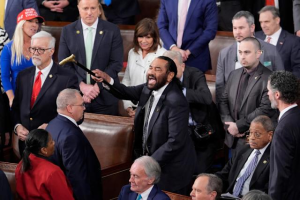
Outside the Capitol, reporters screamed questions at lawmakers rushing between buildings. Some Democrats openly accused Trump of attacking the foundation of American democracy itself.
One furious House member stood before cameras and declared:
“No president is above the Constitution. Not now. Not ever.”
The statement instantly exploded online.
But inside Republican circles, the reaction was very different.
Trump allies accused Democrats and media organizations of deliberately twisting the former president’s words to trigger another political crisis. Conservative commentators insisted the outrage was manufactured hysteria designed to energize anti-Trump voters ahead of future elections.
“It’s another impeachment circus,” one pro-Trump broadcaster shouted during a primetime segment. “They’ve wanted this from the beginning.”
That argument electrified Trump’s base.
Supporters flooded social media defending the former president while accusing political enemies of weaponizing constitutional language for partisan purposes. Hashtags attacking impeachment efforts surged nationwide as conservative influencers framed the unfolding controversy as an attempted political ambush.
But the pressure on Capitol Hill kept building.
By late afternoon, multiple reports claimed Democratic leadership was quietly discussing procedural options behind closed doors. Though senior officials publicly avoided confirming any immediate impeachment vote, insiders described “extremely intense” conversations taking place throughout the Capitol complex.
The atmosphere reportedly became so chaotic that several lawmakers began receiving emergency security briefings amid fears protests could spiral out of control overnight.
Those fears intensified rapidly.
Crowds gathered outside government buildings carrying signs accusing Trump of authoritarian behavior. Counter-protesters soon arrived waving giant Trump banners and chanting angrily at police barricades.
Helicopters circled overhead as television crews broadcast the escalating scenes nationwide.
Inside cable news studios, commentators nearly shouted over one another trying to interpret the political consequences.
Some analysts warned the controversy could permanently reshape the 2026 political landscape.
Others argued the impeachment frenzy might actually strengthen Trump politically by convincing supporters the establishment remained obsessed with destroying him at any cost.
One veteran political strategist summarized the mood bluntly:
“America is now trapped in a permanent constitutional knife fight.”
That tension became visible everywhere.
Restaurants near Capitol Hill overflowed with journalists, staffers, and lobbyists whispering about impeachment math late into the evening. Phones rang nonstop inside congressional offices while exhausted aides refreshed social media feeds searching desperately for updates.
Meanwhile, Trump reportedly watched the media storm unfold with growing fury.
Sources close to the former president described heated conversations behind closed doors as allies attempted to reassure him the backlash would eventually fade. But insiders claimed Trump remained enraged by television coverage portraying his remarks as anti-constitutional.
“He thinks they’re intentionally distorting everything,” one source reportedly explained. “He sees this as total political warfare.”
The White House-style response operation surrounding Trump immediately launched into damage-control mode.
Allies appeared across conservative media insisting the remarks had been taken wildly out of context. Some claimed the former president had merely criticized political corruption and judicial overreach rather than the Constitution itself.
Yet the effort struggled to slow the avalanche.
Clips from the speech continued spreading online at astonishing speed. Legal experts posted lengthy breakdowns analyzing Trump’s wording line by line while political influencers transformed the controversy into nonstop viral content.
TikTok creators uploaded dramatic reenactments.
Podcast hosts released emergency episodes.
YouTube commentators titled videos with phrases like “Constitutional Crisis” and “Impeachment Meltdown.”
The spectacle consumed the internet.
Even international media outlets joined the frenzy, with several foreign broadcasters describing Washington as emotionally unstable and politically combustible.
One European newspaper called the situation “another chapter in America’s endless institutional civil war.”
That description did not feel exaggerated to people inside the capital.
By nightfall, security presence around the Capitol expanded dramatically. Barricades stretched across surrounding streets while officers monitored growing crowds beneath flashing police lights.
Inside Congress, lawmakers prepared for what many feared could become another historic political confrontation.
Yet uncertainty remained everywhere.
Would impeachment papers actually move forward?
Would moderate Democrats support escalation?
Would Republicans remain united behind Trump?
Nobody seemed certain.
That uncertainty only intensified the emotional chaos surrounding the controversy.
At one point during primetime coverage, a constitutional law professor warned viewers that the real danger might not be impeachment itself — but the growing public belief that America’s institutions were locked in nonstop existential conflict.
“Every crisis now becomes apocalyptic,” the professor explained. “And that’s dangerous for democracy itself.”
Still, few people appeared interested in calming down.
The outrage machine kept accelerating.
Supporters and critics screamed across social media platforms late into the night while cable news anchors recycled dramatic footage from Trump’s rally on endless loop. Protesters remained outside barricades chanting long after dark as Washington braced for another day of political warfare at sunrise.
And somewhere inside the Capitol, according to insiders, impeachment drafts were still circulating quietly from office to office while exhausted lawmakers debated whether the country had finally crossed another irreversible line.
Because in modern Washington, a single sentence can ignite a national firestorm.
And once the machine starts burning, nobody knows how far the flames will spread.