
The laughter inside the theater disappeared almost instantly.
One moment, the audience at The Late Show with Stephen Colbert was roaring through another night of political comedy. The next, the room had fallen into an uneasy silence after Stephen Colbert displayed a series of old photographs featuring Donald Trump and Jeffrey Epstein together during a tense live monologue that instantly exploded across the internet.
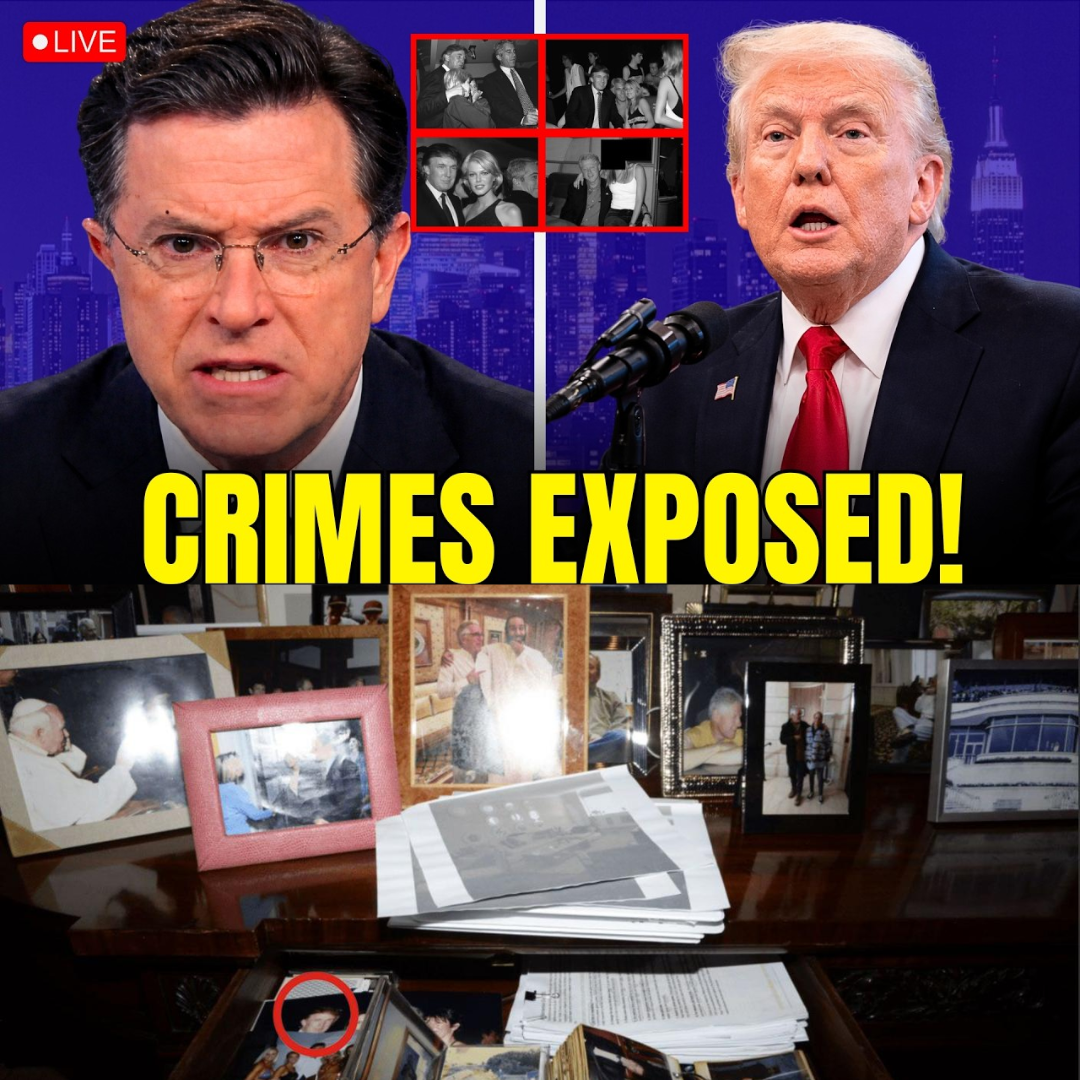
By morning, the segment had become one of the most replayed clips in late-night television this year.
Political commentators were dissecting every second.
Conservative influencers were furious.
Social media had descended into total war.
And millions of viewers were still debating the moment when the audience suddenly stopped laughing.
The controversy began during Colbert’s opening monologue, which focused heavily on elite power circles, political scandals, and the continuing public fascination surrounding Epstein’s long-documented connections to wealthy and influential figures.
At first, the mood inside the studio remained light.
Colbert delivered sarcastic jokes about billionaires, private jets, and political hypocrisy while the audience laughed comfortably through the usual rhythm of late-night satire.
Then his tone changed.
The shift was subtle at first.
The comedian paused, looked down at his desk, and told the crowd he wanted to “show something people keep pretending they’ve never seen.”
The theater quieted immediately.
Producers dimmed the stage lights slightly as a large screen behind Colbert illuminated with the first photograph — an image showing Trump and Epstein smiling together during a high-profile social event decades earlier.
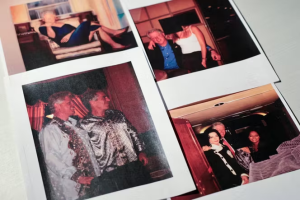
The audience reaction changed instantly.
Scattered nervous laughter echoed through the room.
Several people appeared visibly uncomfortable.
Then came the second image.
Another glamorous party setting.
Another moment of the two men standing together.
This time, the silence deepened.
By the third photograph, the energy inside the theater had transformed completely. Audience members who moments earlier had been laughing loudly now sat frozen in their seats staring toward the screen.
Some reportedly exchanged uncomfortable glances.
Others simply stared forward without reacting at all.
Colbert himself remained unusually restrained.
That calmness made the segment even more intense.
He did not shout.
He did not rant.
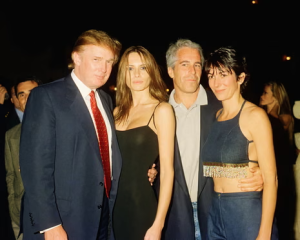
Instead, he spoke slowly while referencing years of public reporting documenting Epstein’s connections to powerful figures across politics, entertainment, finance, and business.
“People act shocked every time these images resurface,” Colbert said quietly. “But they’ve existed for years.”
The room stayed silent.
Then came the fourth photograph.
The image reportedly showed Trump and Epstein during another public gathering surrounded by celebrities and wealthy socialites during the height of New York’s elite party era.
One audience member audibly muttered “wow” beneath the silence.
Colbert paused again before delivering the line that would dominate headlines the next morning.
“Maybe the most disturbing thing,” he said calmly, “is not that these photos exist. It’s how quickly everyone forgets them every single time.”
The statement landed heavily.
And then came the fifth image.
By that point, the theater no longer resembled a comedy audience.
It felt more like a courtroom.
The final photograph lingered on the screen several seconds longer than the others while the audience sat almost motionless beneath the bright studio lights.
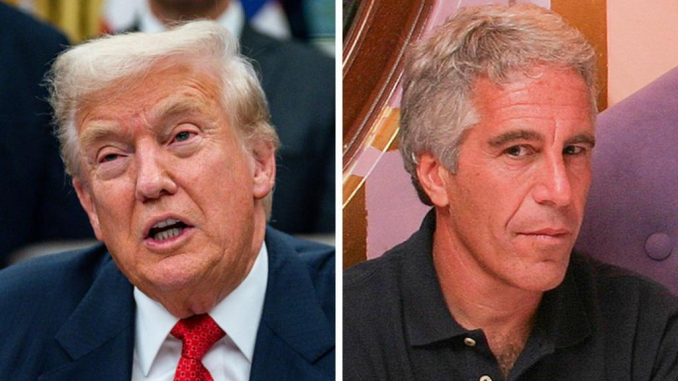
No punchline came immediately afterward.
That was what stunned viewers most.
Instead of pivoting back into comedy, Colbert allowed the silence to hang in the room uncomfortably before moving into a broader discussion about public memory, media cycles, and America’s obsession with political spectacle.
The clip detonated online within minutes.
Users flooded X, TikTok, Reddit, and YouTube reposting fragments of the monologue while arguing fiercely over Colbert’s intent. Some praised the host for confronting uncomfortable public history directly instead of reducing everything to jokes.
Others accused him of exploiting disturbing material for television ratings and partisan attacks.
The backlash intensified overnight.
Trump supporters erupted in anger, accusing Colbert of attempting to imply wrongdoing simply through photographs and social association. Conservative commentators argued the segment ignored the fact that many high-profile individuals had crossed paths publicly with Epstein over the years before his crimes became fully exposed.
“This is guilt-by-photo politics,” one pro-Trump broadcaster declared angrily during a livestream. “Hollywood comedians are trying to turn old party pictures into criminal evidence.”
Critics of Trump responded immediately.
They argued the issue was not the existence of the photographs alone, but the repeated public effort to downplay or dismiss the broader significance of Epstein’s elite social connections whenever the topic resurfaced.
The internet became a battlefield.
Millions of users debated context, history, intent, and media responsibility deep into the night. Some viewers described Colbert’s segment as chilling because of the silence it created inside the theater itself.
Others insisted the moment crossed ethical lines by blending comedy with insinuation.
Cable news networks quickly seized the controversy.
Morning shows replayed clips repeatedly while political analysts debated whether late-night television had evolved into a more emotionally powerful force than traditional journalism itself.
One media expert summarized the moment bluntly:
“When audiences stop laughing during a comedy show, you know something deeper just happened.”
That depth fascinated viewers nationwide.
The segment spread far beyond Colbert’s usual audience. People who rarely watched late-night television began searching for clips online after hearing about the eerie silence inside the theater.
Reaction videos flooded YouTube.
Podcast hosts released emergency episodes.
TikTok creators analyzed audience body language frame by frame.
Even rival late-night comedians referenced the controversy cautiously during their own monologues.
Behind the scenes, entertainment insiders reportedly recognized immediately that Colbert had tapped into something emotionally volatile in American culture: the growing public obsession with elite accountability and institutional distrust.
The Epstein scandal occupied a uniquely disturbing place in the national imagination because it connected celebrity, wealth, politics, secrecy, and power into one sprawling nightmare.
And by placing Trump directly inside that visual history through publicly known photographs, Colbert triggered reactions far larger than ordinary political comedy.
Inside conservative circles, frustration deepened further after clips from the segment began circulating internationally. Foreign media outlets replayed portions of the monologue while discussing America’s increasingly chaotic relationship between politics and entertainment.
Several Trump allies reportedly viewed the segment as part of a broader media strategy aimed at keeping Epstein-related associations tied emotionally to Trump in the public mind regardless of context or nuance.
That fear intensified as hashtags related to the segment continued trending for nearly two days.
Meanwhile, Colbert’s supporters celebrated the monologue as one of the boldest moments in modern late-night television.
Many viewers focused less on the photographs themselves and more on the silence they produced.
Because the silence felt real.
Not scripted.
Not theatrical.
Just deeply uncomfortable.
And in an era dominated by nonstop outrage, screaming panels, and endless political noise, genuine silence on live television suddenly carried enormous emotional power.
By the weekend, analysts were still discussing the segment’s impact.
Some argued it reflected America’s growing inability to separate entertainment from political accountability. Others warned that comedians were increasingly stepping into territory once occupied primarily by investigative journalists and commentators.
But nearly everyone agreed on one point:
The moment changed the atmosphere inside the room completely.
A comedy audience expecting easy laughter instead found itself staring silently at a giant screen filled with images tied to one of the darkest public scandals in modern memory.
And for several long seconds on live television, nobody knew how to react.