
The audience expected tension.
Nobody expected total chaos.
What began as a nationally televised discussion about leadership, media responsibility, and the future of American politics suddenly transformed into one of the most explosive live-TV confrontations of the year after Barack Obama and Donald Trump clashed publicly in a moment that immediately detonated across the internet.
By midnight, cable news networks were replaying the exchange nonstop.
Social media platforms had descended into complete warfare.
Political commentators from every ideological corner were screaming over one another on live television.
And one question dominated the entire country:
Did Obama just publicly corner Trump on live TV?
The event itself had been promoted for weeks as a rare bipartisan forum bringing together influential political figures for a discussion about national unity, democratic institutions, and the future of public discourse in America.
Tickets sold out instantly.
Television executives anticipated strong ratings.
But nobody inside the network studios appeared prepared for what actually unfolded once cameras started rolling.
At first, the atmosphere remained controlled.
Obama spoke calmly about civic responsibility, institutional trust, and the dangers of political polarization overwhelming American democracy.
Trump responded with familiar attacks on the media, Washington elites, and what he described as establishment hypocrisy targeting outsiders and populist movements.
The audience reacted predictably along partisan lines.
Then the conversation changed.
According to viewers inside the studio, Obama began referencing what he described as “the growing gap between political performance and accountability” in modern America.
The room grew noticeably quieter.
Without raising his voice, Obama criticized leaders who “treat public office like personal branding opportunities rather than public responsibility.”
Several audience members reportedly glanced immediately toward Trump.
The tension became impossible to ignore.
Trump interrupted repeatedly, accusing Obama of delivering “another polished lecture” disconnected from ordinary Americans.
The audience reacted with scattered applause and nervous laughter.
But Obama did not take the bait.
Instead, he reportedly smiled slightly before delivering the line that transformed the entire event into viral political warfare:
“The problem with constantly rewriting reality is eventually reality starts answering back.”
The studio froze.
For a brief second, almost nobody moved.
Then came the reaction.
Audience members erupted into overlapping applause, gasps, laughter, and shouting while moderators struggled unsuccessfully to regain control of the discussion.
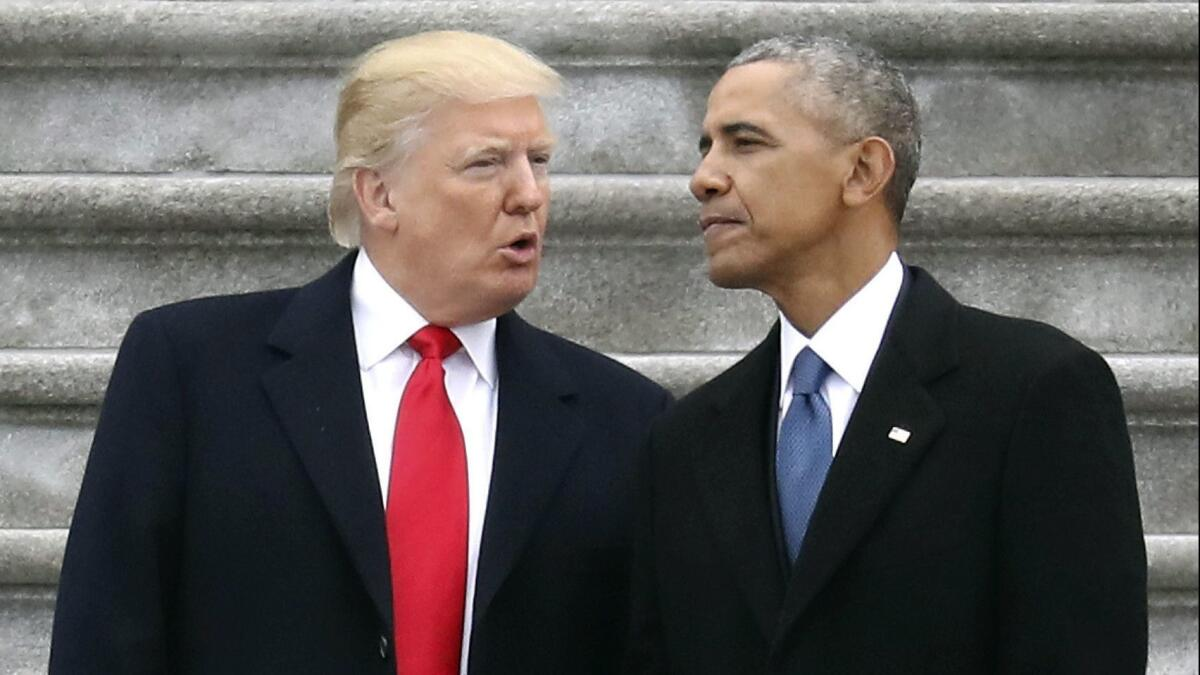
Television producers reportedly screamed instructions through headsets backstage as cameras rapidly shifted between audience reactions and close-ups of both men.
Trump immediately fired back, accusing Obama of hypocrisy and “talking in riddles because he has no answers.”
But the emotional energy inside the room had already shifted dramatically.
Obama remained visibly calm.
Trump appeared increasingly agitated.
And viewers noticed instantly.
Within seconds, clips from the exchange exploded across social media under dramatic headlines:
“OBAMA STUNS TRUMP.”
“LIVE-TV MELTDOWN.”
“THE ROOM WENT SILENT.”
TikTok creators uploaded cinematic edits pairing Obama’s remarks with slow-motion audience reactions and dramatic orchestral music.
YouTube commentators launched emergency livestreams analyzing every facial expression frame by frame.
Podcast hosts released instant reaction episodes before the broadcast had even ended.
The internet consumed the spectacle completely.
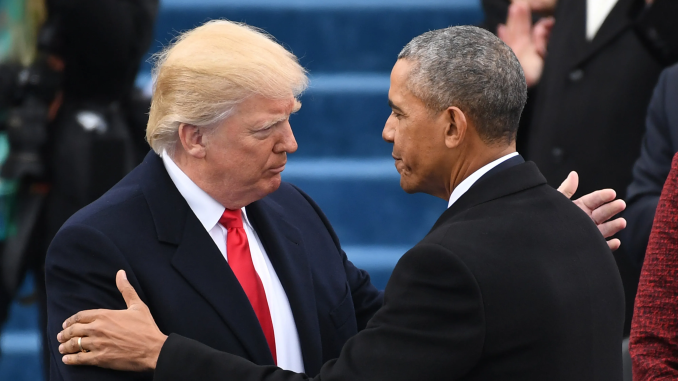
At one point during the confrontation, Obama reportedly criticized the modern political obsession with “constant outrage replacing actual governance,” arguing that democratic leadership requires discipline, truthfulness, and emotional restraint even under pressure.
Again, viewers interpreted the comments as directed squarely at Trump.
Again, the audience reacted loudly.
Trump interrupted repeatedly during Obama’s remarks, at one point accusing him of “pretending to be above politics while quietly controlling the same broken machine.”
That line drew applause from Trump supporters inside the studio.
But the confrontation only intensified afterward.
According to multiple reporters present backstage, producers allegedly worried the event might collapse entirely as both camps grew visibly frustrated during commercial breaks.
Some audience members reportedly shouted political slogans from their seats while security personnel moved closer toward the stage area.
The atmosphere began resembling a political boxing match more than a televised discussion.
Inside conservative media, reactions afterward were immediate and furious.
Several pro-Trump commentators accused Obama of delivering carefully scripted establishment attacks designed to humiliate Trump publicly before a sympathetic audience and hostile media ecosystem.
One broadcaster declared angrily:
“This was not a debate. It was political theater designed for viral clips.”
That statement spread rapidly online.
Meanwhile, critics of Trump celebrated Obama’s calm demeanor throughout the confrontation, arguing that composure itself became Obama’s most effective weapon.
Several communication experts later explained that emotional contrast strongly influences audience perception during live confrontations.
“The calmer one person appears, the more emotional the other side looks by comparison,” one media analyst explained during primetime coverage.
That visual contrast dominated online discussion all night.
Television networks replayed split-screen footage repeatedly showing Obama speaking slowly and deliberately while Trump interrupted energetically and forcefully.
Supporters of Trump argued the interruptions demonstrated passion and refusal to submit to establishment framing.
Critics argued they revealed frustration and loss of control.
The divide remained absolute.
By evening, hashtags tied to the confrontation were trending nationwide across multiple platforms. Meme accounts transformed the exchange into reaction GIFs, parody movie posters, and dramatic political edits viewed millions of times within hours.
Even celebrities joined the conversation online.
Late-night comedians mocked the confrontation relentlessly while political strategists dissected the exchange like a championship sporting event.
Inside Washington, aides from both parties reportedly monitored public reaction carefully. Several insiders allegedly admitted privately that emotionally memorable moments now shape political perception more effectively than lengthy policy discussions.
“People remember scenes, not white papers,” one strategist reportedly observed.
That reality explains why confrontations like this dominate American culture so completely.
Modern politics increasingly functions through emotion, spectacle, symbolism, and viral momentum rather than traditional persuasion alone.
And few rivalries symbolize America’s political divide more powerfully than Obama versus Trump.
The contrast between the two men feels almost cinematic to many Americans.
Obama projects calm intellectual confidence.
Trump projects aggressive emotional dominance.
When those styles collide publicly, audiences react intensely because the confrontation feels bigger than individual politics.
It feels symbolic.
Even international media outlets joined the frenzy.
Several foreign broadcasters described the televised showdown as another example of America transforming politics into emotional entertainment consumed globally in real time.
One overseas newspaper called the exchange “a collision between two completely different visions of leadership.”
That phrase spread widely online because many viewers believed it captured the emotional core of the confrontation perfectly.
Meanwhile, inside Trump-world, according to several media insiders discussing the fallout publicly, frustration reportedly intensified as clips of Obama’s remarks continued accumulating massive online engagement throughout the night.
One strategist allegedly worried the confrontation reinforced narratives portraying Obama as controlled and disciplined while Trump appeared reactive under pressure.
“That visual is politically dangerous,” one analyst reportedly admitted privately.
Still, Trump supporters remained fiercely loyal after the exchange.
Many argued Trump’s willingness to fight aggressively on live television reflects authenticity and strength rather than polished political caution.
Others dismissed Obama’s performance as elite performance art celebrated mainly by establishment media figures already hostile toward Trump.
The battle lines hardened immediately.
But nearly everyone agreed on one thing:
The moment Obama delivered that first sharp response, the atmosphere inside the studio changed completely.
Because in modern America, politics no longer stays inside speeches or policy papers.
It unfolds through moments.
Tone.
Emotion.
Visual contrast.
And viral confrontation.
By midnight, television networks were still replaying clips from the showdown beneath giant “BREAKING NEWS” banners while millions of Americans continued arguing online over who truly dominated the exchange.
Some saw Obama exposing hypocrisy calmly and effectively.
Others saw Trump fighting back against establishment arrogance and media manipulation.
Many simply watched in fascination as another unforgettable chapter unfolded in America’s endless political spectacle.
But for one chaotic night, live television once again became the center of the entire national conversation.