
The ballroom was already tense long before either man stepped to the microphone.
Washington’s political elite filled the massive hall beneath glittering chandeliers while television cameras lined the perimeter and reporters crowded shoulder-to-shoulder near the stage waiting for what many suspected could become one of the most uncomfortable political encounters of the year.
They were right.
Because what began as a familiar exchange of political jabs between Donald Trump and Barack Obama quickly transformed into a jaw-dropping moment of public confrontation that left the audience stunned into near silence.
And by the end of the night, social media had completely exploded.
The event itself was supposed to focus on national leadership, media responsibility, and the state of political discourse in America. High-profile lawmakers, journalists, donors, celebrities, and former administration officials packed the room while networks prepared extensive live coverage.
But almost nobody watching cared about the policy discussions.
They cared about Trump and Obama sharing the same stage.
The tension between the two men has fueled political media for years. Trump built much of his early political rise around attacking Obama’s presidency, policies, and leadership style. Obama, meanwhile, has often responded with carefully delivered humor, restrained criticism, or sharp remarks wrapped inside calm presentation.
The contrast between them has always fascinated audiences.
Trump thrives on confrontation, volume, and dominance.
Obama projects controlled composure and measured confidence.
And on this particular night, those differences collided publicly in spectacular fashion.
According to witnesses inside the ballroom, the atmosphere shifted dramatically the moment Trump began speaking. At first, his remarks followed familiar territory — attacks on the media, criticism of Washington institutions, and repeated claims that previous administrations had weakened America economically and globally.
The audience reaction remained mixed but controlled.
Then Trump mentioned Obama directly.
The room instantly tightened.
Several attendees reportedly exchanged nervous glances while reporters leaned forward preparing for headlines before the line had even landed.
Trump reportedly mocked Obama’s presidency as “eight years of excuses dressed up as elegance” before criticizing foreign policy decisions, economic struggles during parts of Obama’s administration, and what he described as “leadership built entirely on speeches.”
A portion of the audience applauded loudly.
Another portion appeared visibly uncomfortable.
But Trump continued.
At one point, according to attendees, he joked that Obama “spent more time narrating America than fixing it.”
That line triggered scattered laughter across the ballroom while cameras immediately cut toward Obama’s table.
And that was the moment everything changed.
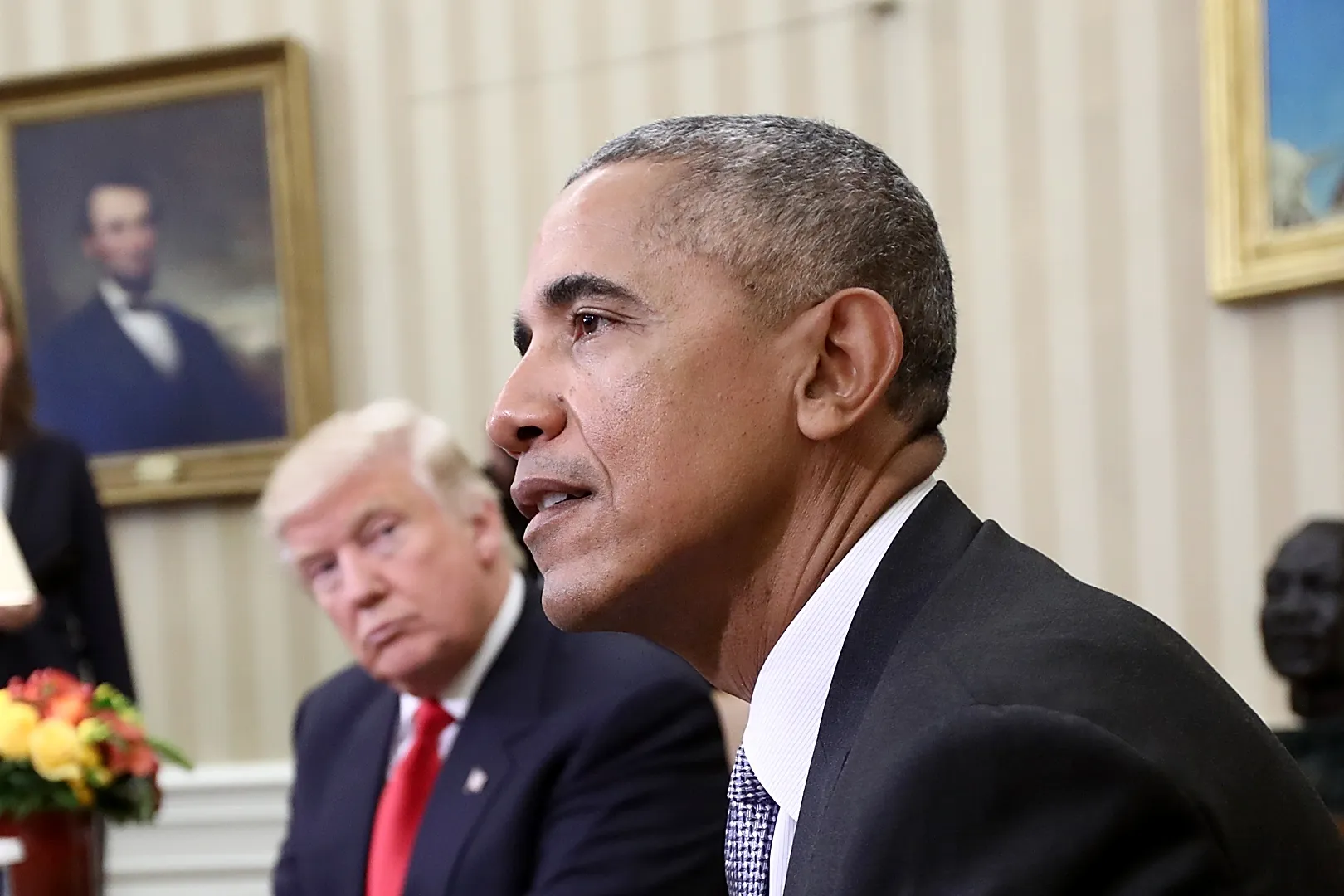
Because instead of reacting emotionally, Obama reportedly leaned back calmly, smiled slightly, and waited.
The restraint itself seemed to confuse the room.
Trump finished speaking to loud applause from supporters before returning to his seat appearing visibly satisfied with the reaction.
Then Obama stood up.
And suddenly the energy inside the ballroom became almost impossible to describe.
According to multiple reporters present, conversations stopped immediately. Audience members straightened in their chairs while television producers rushed to prepare split-screen coverage anticipating confrontation.
Obama walked slowly toward the podium carrying several pages of notes.
But witnesses claim he barely looked at them.
At first, Obama spoke calmly about civic responsibility, democratic institutions, and the dangers of political division overwhelming national unity.
The room listened carefully.
Then, without raising his voice, Obama turned directly toward Trump.
And delivered the line that detonated across America within minutes.
“You can measure leadership by many things,” Obama reportedly said. “Volume is not usually one of them.”
The ballroom froze.
For a second, almost nobody reacted.
Then came the applause.
Not ordinary applause.
An eruption.
Several audience members reportedly stood immediately while others laughed in shock at the precision of the response.
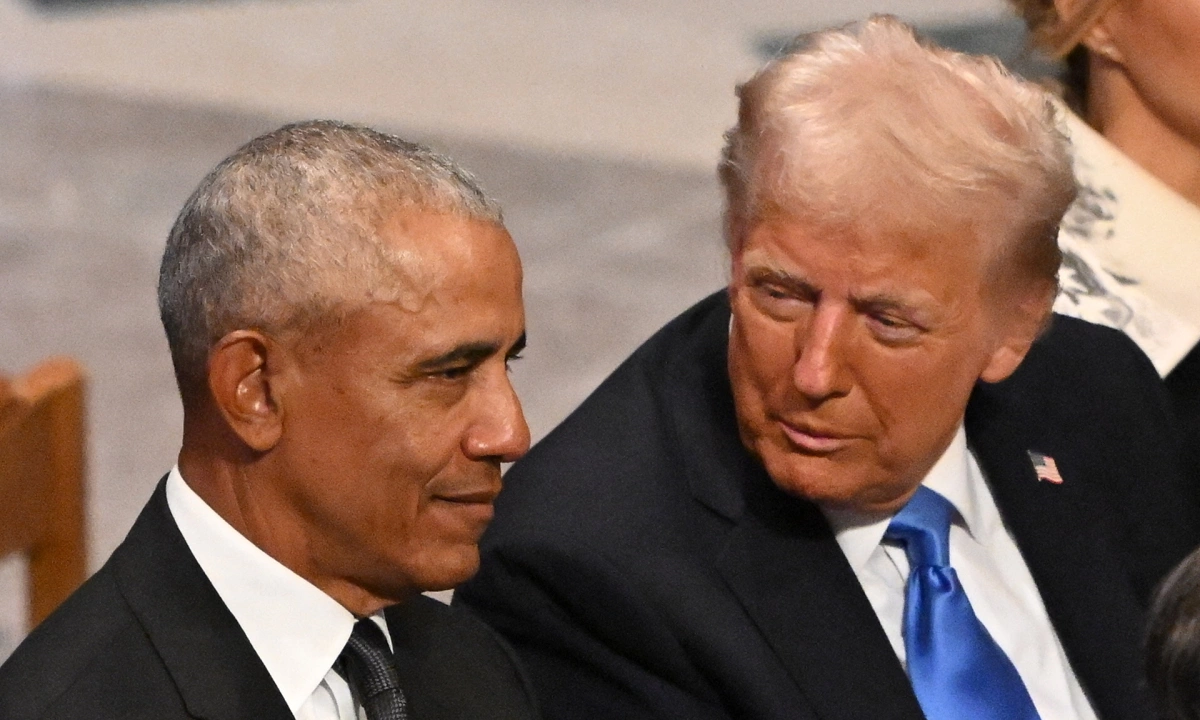
Trump’s expression reportedly hardened almost instantly as cameras captured him sitting motionless while applause echoed through the hall.
But Obama was not finished.
Continuing in the same calm tone, he allegedly added:
“The presidency is not a reality show. The goal is not to dominate every conversation. The goal is to leave the country stronger than you found it.”
That sentence hit the room like a thunderclap.
By then, journalists were already sending urgent updates to newsrooms nationwide.
Social media exploded before Obama even finished speaking.
“OBAMA DESTROYS TRUMP.”
“ROOM GOES SILENT.”
“TRUMP LEFT SPEECHLESS.”
The clips spread across the internet at terrifying speed.
TikTok creators uploaded dramatic edits pairing Obama’s remarks with cinematic music and slow-motion reaction shots from the audience.
YouTube commentators launched emergency livestreams dissecting every facial expression and pause.
Cable news networks interrupted scheduled coverage to replay Obama’s response repeatedly beneath giant “BREAKING NEWS” graphics.
The moment instantly became national political theater.
Inside conservative media, reactions were furious.
Several commentators accused Obama of delivering carefully scripted elitist mockery designed to humiliate Trump publicly before a sympathetic establishment audience.
Some pro-Trump influencers argued the crowd reaction proved Washington insiders still worship polished speeches while ignoring real-world frustrations felt by ordinary Americans.
One broadcaster declared angrily:
“They cheer rhetoric because rhetoric is all Obama ever gave them.”
That statement spread rapidly online.
But critics of Trump celebrated Obama’s response as a masterclass in restraint and timing. They argued Obama succeeded precisely because he refused to match Trump’s volume or aggression.
Instead, he weaponized calmness.
That contrast became the defining image of the night.
Several communication experts later explained that political audiences often respond powerfully when someone remains composed under attack. By waiting patiently rather than reacting immediately, Obama allowed tension to build emotionally before delivering concise remarks that appeared controlled rather than emotional.
“It felt surgical,” one media analyst explained during a primetime panel discussion.
The visual optics mattered enormously.
Television cameras repeatedly replayed split-screen footage showing Trump speaking animatedly moments before Obama responded calmly without visible anger.
Those images dominated political coverage for the next twenty-four hours.
Even international media outlets joined the frenzy.
Several foreign broadcasters described the exchange as symbolic of America’s deeper political divide between confrontation-driven populism and institutional traditionalism.
One overseas newspaper called the moment “a collision between political performance and presidential composure.”
That phrase spread widely online because many viewers felt it captured exactly what they had witnessed.
Meanwhile, inside the ballroom itself, attendees reportedly remained emotionally stunned long after the exchange ended.
Some guests described the atmosphere afterward as “electric.” Others called it “deeply uncomfortable” because the confrontation felt less like ordinary political banter and more like two entirely different visions of leadership colliding publicly in real time.
Several lawmakers allegedly avoided reporters entirely while leaving the event.
Others rushed directly toward cameras eager to frame the exchange in partisan terms before opponents controlled the narrative online.
Because modern politics moves at internet speed.
And whoever shapes the emotional interpretation first usually wins.
By midnight, hashtags connected to the confrontation dominated multiple social-media platforms nationwide.
Meme accounts transformed Obama’s remarks into graphics, reaction GIFs, and parody movie posters.
Podcast hosts released emergency episodes.
Political strategists dissected the exchange obsessively.
Even celebrities joined the conversation online.
The confrontation had escaped the ballroom entirely and entered full-scale American cultural warfare.
Inside Trump-world, according to several media insiders discussing the fallout publicly, frustration reportedly intensified as clips of Obama’s remarks continued accumulating millions of views.
One strategist allegedly worried the exchange reinforced existing narratives portraying Trump as emotionally reactive while Obama appeared calm under pressure.
“That visual contrast is hard to fight,” one analyst reportedly admitted privately.
Still, Trump supporters remained fiercely loyal throughout the backlash.
Many argued Trump’s willingness to attack former presidents directly reflects authenticity and strength rather than polished political caution.
Others dismissed Obama’s response as scripted arrogance celebrated mainly by media elites already hostile toward Trump.
The divide remained absolute.
But nearly everyone agreed on one thing:
The moment Obama responded, the emotional energy in the room changed completely.
Because modern political battles are no longer fought only through policy arguments.
They are fought through moments.
Images.
Tone.
Timing.
And emotional perception.
On this particular night, one carefully delivered response transformed an ordinary political event into a viral national spectacle watched by millions.
By the following morning, television networks were still replaying the confrontation while social media remained flooded with endless arguments about who truly “won” the exchange.
Some Americans saw Obama’s remarks as a powerful defense of presidential dignity.
Others saw establishment smugness aimed at humiliating Trump publicly.
Many simply watched in fascination as another unforgettable chapter unfolded in America’s endless political drama.
But for one brief moment inside that glittering ballroom, even Washington’s loudest voices stopped talking.
Because the silence after Obama’s response said more than the shouting ever could.